
A common misconception is that a safer crypto wallet is simply one with more warning banners. In practice, security depends less on the number of alerts than on whether a user can understand what a transaction is expected to do before signing it. That distinction matters when you rabby installieren or look for a reliable way to rabby wallet herunterladen: Rabby is not a bank, a custody service, or a guarantee that a decentralised application is honest. It is better understood as a transaction-reading and signing interface for Ethereum and other EVM-compatible networks.
For German-speaking DeFi users, that design emphasis addresses a familiar problem. A single wallet may be used with Ethereum, Arbitrum, Optimism, Base, Polygon, Avalanche, BNB Chain and many less familiar networks. The assets may look similar across chains, while the contracts, permissions, fees and risks are not. Rabby’s appeal lies in bringing those differences into the signing process through network recognition, transaction simulation and security warnings.
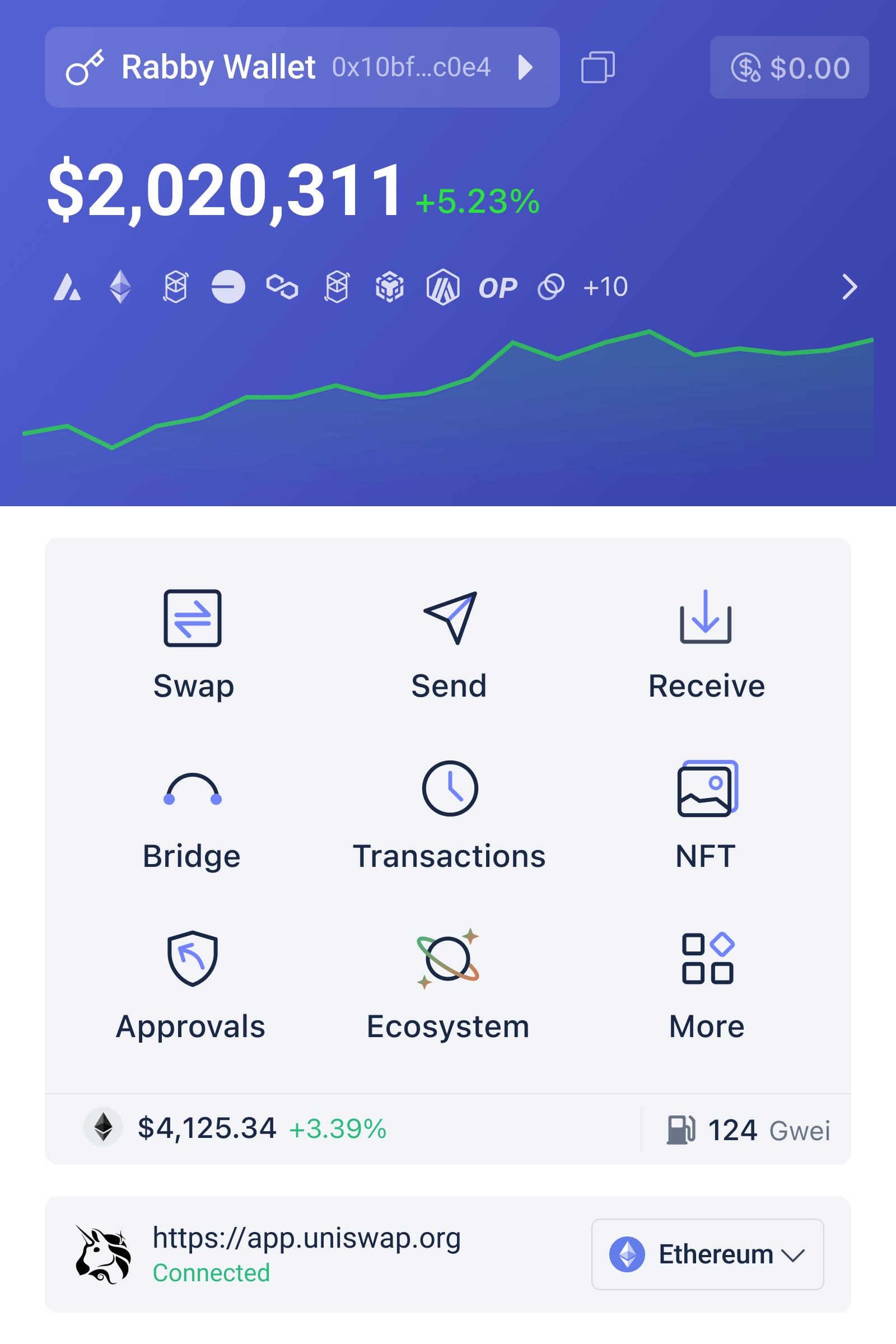
From a simple key holder to a DeFi control panel
Earlier browser wallets were often treated as digital key rings: they stored access credentials and passed transaction requests from a dApp to the user. That model was useful, but it left much of the interpretation to the user. A contract call could be presented as technical data, even when its economic effect was a token swap, a loan repayment or a broad token approval.
Rabby represents a later stage in this evolution. Developed by DeBank and designed for DeFi, it combines non-custodial key management with a richer interpretation layer. Its software is open source under the MIT licence, allowing the code to be inspected independently. Private keys are intended to remain locally on the user’s device rather than being transmitted to Rabby’s servers. This is an important architectural boundary: Rabby can help explain a transaction, but it should not be confused with a custodian that can recover funds or reverse an unintended transfer.
The practical comparison is often with MetaMask. MetaMask has broad recognition and extensive dApp familiarity, while Rabby focuses particularly on multi-chain DeFi workflows and expanded security feedback. Neither comparison should be reduced to “one wallet is safe and the other is unsafe.” The more useful question is which interface makes a user’s actual decision easier to verify. Someone who mainly uses one established network may value familiarity. Someone moving between many EVM chains may value automatic network switching and a more detailed pre-signing review.
What installation should mean in practice
When searching for a rabby wallet extension, source verification is the first security step. Downloading a wallet from a search advertisement, an unofficial mirror or a copied website creates a risk before the wallet is even opened. For a browser-based setup, use the official distribution route for a supported browser such as Chrome, Brave or Edge, then check the extension identity and permissions before creating or importing an account. Rabby is also available in desktop and mobile forms, but the same principle applies: the download channel matters as much as the application’s features.
Creating a new wallet generates a recovery phrase. That phrase is the real source of control, not the browser password or the wallet interface. It should be written down offline and never entered into a website, chat window, cloud note or “support” form. A wallet that is non-custodial removes an intermediary, but it also transfers responsibility to the user. In Germany, where users may already distinguish carefully between a regulated exchange and self-custody, this is the central operational trade-off: more control also means fewer avenues for recovery after human error.
For meaningful balances, hardware-wallet compatibility with Ledger, Trezor or OneKey adds another layer. The browser can prepare and display a transaction, while the private key remains inside a separate signing device. This does not make a malicious dApp harmless, but it reduces the chance that a compromised computer can silently extract the key. The strongest setup is therefore not “Rabby alone,” but an appropriate combination of verified software, a hardware signer and deliberate transaction review.
Why simulation is useful—and why it is not an oracle
Rabby’s transaction simulation is its most educational feature. Before a user signs, the wallet simulates the proposed action and shows expected changes to token balances. In a simple swap, this can expose the amount leaving the wallet, the asset expected in return, and potentially relevant approval activity. The security engine also checks addresses and contracts for signals associated with phishing, known exploits or unlimited token approvals.
The deeper insight is that simulation changes the unit of attention. Instead of asking only, “Do I recognise this website?”, the user can ask, “What state change is this transaction requesting?” That is a stronger mental model. A familiar dApp can still contain a dangerous approval request, while an unfamiliar interface may generate a transaction whose economic effect is clearly limited. The simulation helps connect technical contract calls to portfolio consequences.
There is a boundary, however. A simulation is a forecast based on available blockchain and provider data, not a legal or economic guarantee. The result can depend on current state, RPC availability, contract behaviour and the exact moment of execution. A transaction may encounter changed liquidity, altered prices, a reordered execution environment or a contract condition that was not visible in the simulated state. A warning system can also miss a new attack or classify a complex contract imperfectly. Users should treat simulation as a decision aid, not as permission to sign automatically.
This is especially important for bridges and approvals. Rabby integrates cross-chain routes through bridge protocols such as LI.FI, and it can aggregate swap routes involving venues such as Uniswap and 1inch. Convenience increases when assets can be moved or exchanged from one interface, but the underlying risks do not disappear. A bridge introduces additional contracts and operational dependencies; a swap depends on liquidity, slippage and route execution; an approval may allow a contract to spend tokens later. The shorter interface is not necessarily the shorter risk chain.
Multi-chain convenience creates a new failure mode
Rabby supports more than 140 EVM-compatible chains and can automatically switch to the network requested by a connected dApp. This removes a common source of friction: manually selecting a network before every action. It also introduces a subtle cognitive hazard. Automatic switching can make a chain change feel less consequential than it is.
A user may hold the same token symbol on several networks, but those balances are not interchangeable without a bridge or another cross-chain mechanism. Fees are also paid in the native asset of the network unless a service such as Rabby’s Gas Account makes another arrangement possible. Gas Account can allow fees to be paid with stablecoins such as USDC across networks, which is convenient when a user lacks the native token. Yet convenience should not obscure the service dependency, pricing conditions or the fact that the transaction still occurs on a particular chain.
A reusable pre-signing checklist is therefore more valuable than any single wallet feature. Confirm the active network, the source and destination assets, the amount, the expected balance change, the approval scope and the final recipient or contract. If the action is a bridge, add a second question: what is the actual receiving chain, and how will the asset be redeemed or used there? These checks take little time and remain useful even when the interface is fast.
Backend independence and the limits of wallet infrastructure
Rabby is designed so that it does not independently create or alter transactions; it acts as an interface and reviewer around the user’s signing decision. Core signing functions can remain usable offline if Rabby’s servers are unavailable. This separation is valuable because it reduces dependence on a central service for the fundamental act of authorising a transaction.
But “offline signing remains possible” does not mean every wallet feature works without infrastructure. Security intelligence, token presentation, simulations, route aggregation, bridge quotes and network data generally depend on information sources. If those sources are unavailable or stale, the user may have less context even though the key is still under local control. The useful distinction is between authority and information: Rabby may not possess authority over the funds, while its convenience and analysis features can still depend on external systems.
The same distinction helps explain Rabby Points. Points earned through actions such as swaps, gas top-ups or referrals may make the product more engaging, but a rewards layer should not influence whether a transaction is economically sensible. Incentives can encourage activity; they cannot improve contract quality, eliminate bridge risk or compensate for a signing mistake. For serious DeFi use, security and transaction necessity should come before loyalty benefits.
Which wallet approach fits which user?
Rabby is a strong fit for users who regularly interact with several EVM chains, compare decentralised exchange routes, use bridges or want a more explicit transaction review. Its combination of automatic network handling, simulation, contract warnings and hardware-wallet support is designed for active DeFi rather than occasional token storage.
A more familiar general-purpose wallet may still be preferable for users who prioritise ecosystem familiarity, a particular extension workflow or broad community troubleshooting. A hardware wallet remains the better primary security anchor for substantial holdings, regardless of which browser interface prepares the transaction. And a centralised exchange may be simpler for users who do not want to manage recovery phrases, although that simplicity comes with counterparty and account-access risks.
The sensible conclusion is conditional rather than absolute. If a user’s main problem is not knowing what a multi-step DeFi transaction will do, Rabby’s review layer can materially improve the decision process. If the main problem is poor key hygiene, no interface can compensate for a leaked recovery phrase. If the next generation of wallet tooling becomes more useful, it will likely be because simulations become more understandable and chain-specific risk becomes easier to compare—not merely because wallets support still more networks.
FAQ: Rabby installation and use
Is Rabby a custodial wallet?
No. Rabby is a non-custodial wallet in which private keys are stored locally on the user’s device. The user controls the recovery credentials and is responsible for protecting them. Rabby cannot normally reverse an on-chain transfer or restore a lost recovery phrase.
Does transaction simulation make every DeFi transaction safe?
No. Simulation shows expected effects and can expose suspicious approvals or unexpected balance changes, but it is based on a changing blockchain state and available data. Review the network, contract, token amounts, approvals and recipient yourself, especially for bridges and unfamiliar dApps.
Is Rabby better than MetaMask?
That depends on the workflow. Rabby is particularly suited to multi-chain EVM DeFi and detailed transaction review, while MetaMask may be preferred for familiarity or an established personal setup. The best choice is the one that makes the user verify the transaction rather than sign by habit.